Call
 Book a Visit
 Blog
 YouTube
Wherever you are,
Busan · Changwon · Seoul lawyers
Law Firm Yulmaru
Seoul, Busan, Changwon:
an attorney near you


Legal advice grounded in a deep understanding
of each practice area.
It is depth, built through continual effort,
reflection and wide experience.
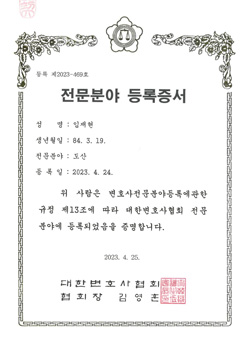
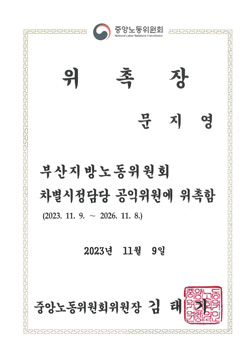
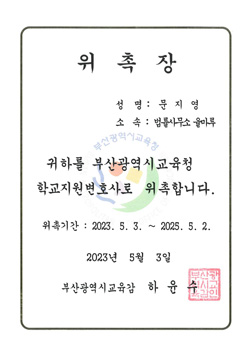
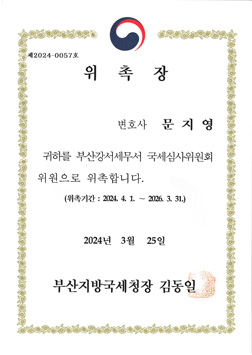
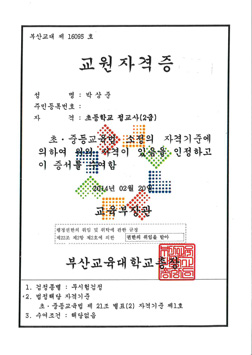
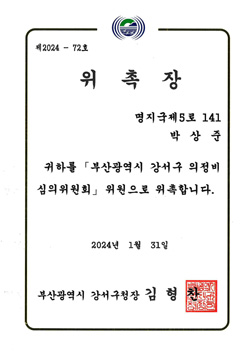
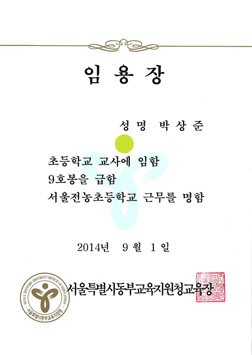
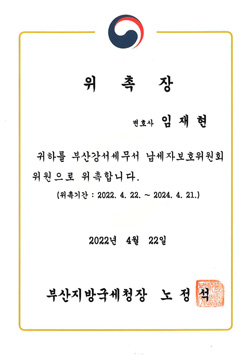
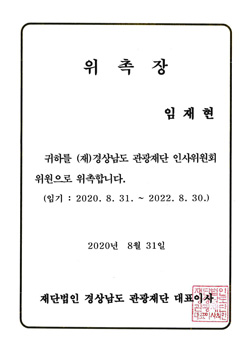
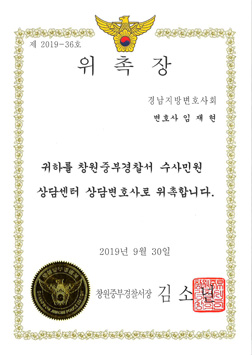
Visit whichever of Seomyeon, Centum or Myeongji is closest. For individual rehabilitation and bankruptcy, Seomyeon is near the Busan Bankruptcy Court; for West Branch cases, Myeongji is convenient; for East Branch cases, Centum is convenient.
Monday to Friday, 09:00 to 18:00. If you need an evening or weekend consultation, please ask by phone.
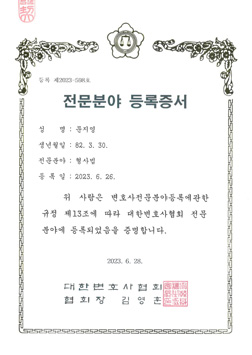
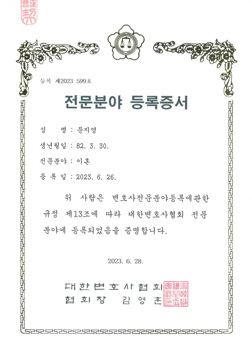
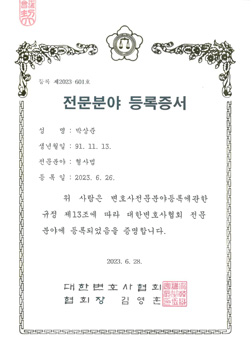
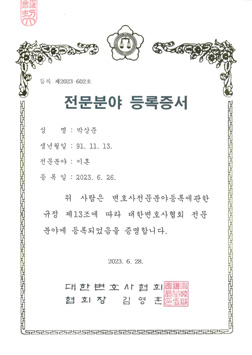
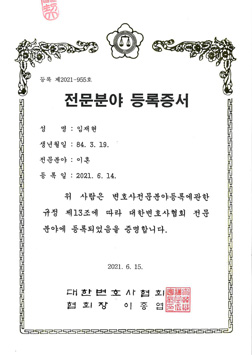
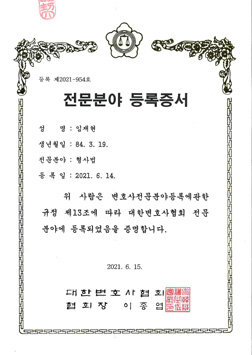
Only attorneys who have registered a specialization with the Korean Bar Association are described as specialists in that area. At Yulmaru, the registered specializations are Criminal Law (Park Sang Jun, Moon Ji Yeong), Divorce (Lim Jae Hyun, Park Sang Jun, Moon Ji Yeong) and Insolvency (Lim Jae Hyun).
The Changwon Office is 2 minutes on foot from the main gate of the Changwon District Court. It handles consultations for cases in Changwon, Masan, Jinhae and Gimhae. The phone number is 055-715-3119.
The originals or photos of the documents you received and a note of the case history in date order are enough. Be sure to bring any document with a deadline on it (summons to appear, lawsuit complaint, payment order, school notice).
Most people first learn of it when the investigator asks them to appear. The request should in principle be a written summons, but it can also come by phone or text message (General Investigative Rules, Article 19(3)), and the case lookup screen may not show the case right away depending on intake and assignment status, so a failed lookup alone does not mean you are not a suspect. If you were told a complaint is coming, do not delete related messages or transaction records; keep them.
It can. A witness is a person who is not a suspect and is asked to give a statement (Criminal Procedure Act, Article 221), and if a suspicion comes to light after the interview, the person may be converted to a suspect. Before questioning a suspect, the police must tell you that you may refuse to make statements (Article 244-3), so whether you received that notice shows whether your status has changed. Before the interview, it helps to lay out your relationship to the case in date order.
No. Under the Attorney-at-Law Act, Article 23 and the KBA Regulations on Attorney Advertising, only a lawyer who has registered a specialization with the Korean Bar Association may describe themselves as a "specialist" in that field. All three of Yulmaru's divorce lawyers have registered a Divorce specialization, and you can confirm this in the KBA specialist lawyer search.
There is no procedure called forced divorce; judicial divorce fills that role. Even if your spouse will not agree, you can obtain a divorce by Family Court judgment if you prove a ground for divorce under the Civil Act, Article 840 with evidence. Once you file the complaint, the case first goes to mediation (Family Litigation Act, Article 50), and if mediation fails it proceeds to trial.
Yes. If one spouse's individual rehabilitation case is pending at the Busan Bankruptcy Court, the other spouse may file with that court, and the same rule applies between a principal debtor and a guarantor or between joint debtors on the same debt (Debtor Rehabilitation and Bankruptcy Act, Article 3(3)3). Each spouse still files a separate application and repayment plan, and each is reviewed on their own income and assets.
As a rule, no. Claims listed in the creditor list cannot be paid or collected except under the repayment plan (Debtor Rehabilitation and Bankruptcy Act, Article 582), and paying only a particular creditor after filing can be avoided by the trustee (Article 584, applying Article 391 mutatis mutandis). Once a stay or prohibition order is issued, even demanding payment is prohibited (Article 593(1)4).
No. It is held by the School Violence Countermeasures Committee of the district office of education that oversees the school (Act on the Prevention of and Countermeasures against Violence in Schools, Article 12(1)). In Busan, five district offices of education (Seobu, Nambu, Bukbu, Dongnae and Haeundae) divide the schools by district and county, and administrative appeals against measures go to the Administrative Appeals Commission of the Busan Metropolitan Office of Education.
It is not too late. After the statement there is still work at every stage: the investigation by the dedicated body, the written opinion and oral statement at the committee, and any appeal after the measure is notified. A Busan school violence lawyer starts by putting the facts back in date order so that the statement already submitted and the opinion still to come do not contradict each other.
 Call us
 KakaoTalk
 Blog
 Naver Booking