

 Call
Call Book a Visit
 Blog
Blog YouTube
- What to check
- Criminal Law registration and the real name of the lawyer in charge
- Checking registration
- KBA lawyer search
- Competent courts
- Busan District Court main court, East Branch, West Branch
- Lawyers in charge
- Park Sang Jun, Moon Ji Yeong
What do I check when choosing a criminal lawyer?
There are five things to check: whether the lawyer has registered a Criminal Law specialization with the Korean Bar Association (KBA), whether the lawyer you consulted will handle the case personally, whether a lawyer will attend questioning by the investigative agency with you, whether the office is within easy reach of the court hearing the case, and whether the scope of the engagement and the fee are put in a written contract. You can verify all five yourself, either by searching or by asking at the consultation. In a criminal case, what you say at the first questioning is recorded in a statement and becomes the basis for the rest of the process. If you have been summoned, go through these checks before the questioning date.
| Check | Why it matters | How to check |
|---|---|---|
| Criminal Law specialization registration | The KBA registers it after reviewing requirements such as at least 3 years of legal practice and at least 30 criminal cases handled in the last 3 years | Search by real name in the lawyer search on the KBA website |
| Real name of the lawyer in charge | The person you consulted may not be the person who actually attends questioning and appears at trial | Check the lawyer's name in the engagement contract and in the notice of appointment of defense counsel |
| Attendance during investigation | Defense counsel may attend the interrogation of a suspect (Criminal Procedure Act, Article 243-2) | Ask at the consultation whether a lawyer will attend in person on the questioning date |
| Competent court and office location | Hearings on detention and trial dates are often set at short notice | Check whether the case will go to the main court, the East Branch or the West Branch |
| Written contract | Whether the engagement covers the investigation, the first instance or the appeal often becomes a dispute later | Check that the contract sets out the scope for each stage and the terms for any extra fee |
Once a trial begins, you receive a case number and can check hearing dates and results yourself under "My Case Search" on the Supreme Court of Korea website. This means you do not have to rely only on the lawyer's explanation for progress.
Which court will hear a case in Busan?
Criminal trials in Busan are divided among the Busan District Court main court, the East Branch and the West Branch. Territorial jurisdiction is based on the place of the crime or the defendant's address, residence or present location (Criminal Procedure Act, Article 4). The jurisdictional areas published on the Busan District Court website are as follows.
| Court | Location | Jurisdictional area |
|---|---|---|
| Busan District Court, main court | 31 Beobwon-ro, Yeonje-gu | Jung-gu, Dong-gu, Yeongdo-gu, Busanjin-gu, Dongnae-gu, Yeonje-gu, Geumjeong-gu |
| Busan District Court, East Branch | 20 Jaeban-ro 112beon-gil, Haeundae-gu | Haeundae-gu, Nam-gu, Suyeong-gu, Gijang-gun |
| Busan District Court, West Branch | 77 Myeongjigukje 7-ro, Gangseo-gu | Seo-gu, Buk-gu, Sasang-gu, Saha-gu, Gangseo-gu |
Juvenile protection cases involving minors under 19 are handled by the Juvenile Division of the Busan Family Court. Ask first at the consultation which court your case is likely to go to.
Questions to ask at the consultation
- Which lawyer will personally attend the questioning and the trial in my case?
- Will you help me prepare my statement before questioning, and will you attend on the day?
- What specialization have you registered with the KBA?
- Which police station and court is this case likely to proceed in?
- Does the engagement cover only the investigation, or also the first-instance trial?
- Who will report progress to me, and how?
- If the case needs a settlement with the victim, who will handle that process?
Warning signs to avoid
Article 23(2) of the Attorney-at-Law Act prohibits advertising that creates unjustified expectations about the results of the work, advertising that exaggerates facts or leaves some out so as to mislead, and advertising that compares the lawyer with other lawyers. Article 4 of the KBA Rules on Attorney Advertising also prohibits advertising that puts forward the percentage of cases won, release rates or predictions of outcomes. The signs below go against that purpose.
- Promises of results, such as "We will get you a non-indictment" or "A suspended sentence is certain"
- Advertising that leads with figures such as non-indictment rates or release rates
- Hinting at influence by claiming to know someone at the investigative agency or court
- Recommending a contract after you have consulted only with staff and never met a lawyer. A non-lawyer giving legal advice for payment is an act punished under Article 109 of the Attorney-at-Law Act
- Asking for payment first without a contract
When legal fees are a burden
If a defendant who is detained, a minor, aged 70 or over, or in certain other situations has no defense counsel, the court appoints a court-appointed defense counsel on its own authority. A defendant who cannot hire defense counsel for financial reasons may ask the court to appoint one (Criminal Procedure Act, Article 33). If a suspect at a pre-detention warrant hearing has no defense counsel, the judge also appoints one on the court's own authority (Criminal Procedure Act, Article 201-2(8)). The Korea Legal Aid Corporation gives telephone consultations at 132 (no area code), and it can tell you whether you qualify for legal aid.
How to check Yulmaru against these points
At Law Firm Yulmaru, criminal cases are handled by Park Sang Jun and Moon Ji Yeong. Both have registered a Criminal Law specialization with the KBA, and you can confirm this by searching their real names in the lawyer search. The Busan offices are in three places: Seomyeon (a 1-minute walk from Exit 12 of Seomyeon Station), Centum (97 Centum jungang-ro, Haeundae-gu) and Myeongji (80 Myeongjigukje 2-ro, Gangseo-gu). The procedures for each type of case are set out in Busan criminal cases.
Attorneys in Charge
 Park Sang Jun Managing PartnerKBA-registered specialization: Criminal Law, DivorceWorked as an elementary school teacher before becoming an attorney. Graduated from Busan National University of Education and Pusan National University Law School. Supervising attorney at the Pusan National University Legal Clinic.
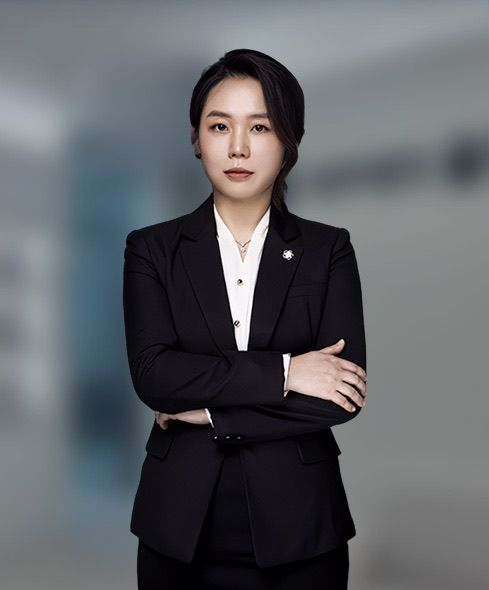 Moon Ji Yeong PartnerKBA-registered specialization: Criminal Law, DivorceLaw education attorney for violence and delinquency prevention at the Busan Metropolitan City Office of Education, and public interest member of the Busan Regional Labor Relations Commission. Graduated from Pusan National University Law School.